Second, our approach does not explicitly classify buyers, which are entities that were not classified as sellers. These different regimes suggest that the ecosystem’s resilience is mainly supported by the high demand of buyers rather than the response of the sellers. Interestingly, the S2S network shows an intermediate level of resilience, which suggests that the S2S network might play the role of a supply chain network on the dark web. For instance, multisellers belong to set of market-only or market-U2U sellers, but not to the set of U2U-only sellers by definition. For example, to obtain a monthly time series of sellers, we compute the union of the lists of sellers for each month. We perform the same procedure to compute the daily time series of multibuyers but using the daily time series of buyers obtained from step 2.
In the digital age, the internet has evolved into a realm that encompasses both the visible and hidden corners of society. One of the more enigmatic aspects of this landscape is the existence of active darknet markets. These platforms often operate outside the constraints of traditional regulation, enabling users to buy and sell goods and services anonymously. Understanding how these markets function is essential for anyone seeking to navigate the complexities of online security, privacy, and the potential risks involved.
- WeTheNorth is a darknet marketplace established in 2021, notable for its Canadian focus and community vibe.
- Doing this manually requires vast amounts of resources; however, you also can't simply scrape the website, as such activity can quickly get you banned from a site.
- It can be dizzying to keep track of which markets are still active.
- These signals include not only the duration of sellers’ activity on the sites, but also their status or rank and various indicators of criminal performance .
Active Darknet Markets
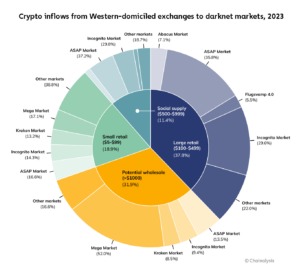
As a result, our data set consists of more than a decade of the entire transaction history of 31 DWMs between June 2011 and February 2021, as shown in Fig. The resulting data set includes for each transaction the source and destination entities, the time, and the value of the transaction. Although other coins are used, such as Monero recently, Bitcoin is still the mostly used in the ecosystem, being supported by more than 93% of markets7,9. We use data of DWM transactions on the Bitcoin blockchain pre-processed by Chainalysis Inc. DWMs are accessed through darknet browsers supporting the onion routing protocol (e.g., Tor), which provides anonymous communication connections35.
Active darknet markets are online marketplaces that exist on the dark web, which is a part of the internet not indexed by conventional search engines. These platforms typically require specific software, such as Tor, to access. Users are drawn to these markets for various reasons, including the anonymity they offer and the diverse array of goods and services available, ranging from illicit substances to digital items like hacking tools and counterfeit documents.
- However Black Bank, which as of April 2015update captured 5% of the darknet market's listings, announced on May 18, 2015, its closure for "maintenance" before disappearing in a similar scam.
- This means they typically have a high turnover of listings, sometimes into the millions.
- These international sellers are otherwise unlikely to have any interest in supplying such a small, distant market.
- We found that the total volume traded on these dark marketplaces dropped only temporarily following closures, revealing a remarkable resilience of the marketplace ecosystem.
- The Dark Web is a place where sellers of illegal drugs, identities, information (passwords, account numbers, etc.) weapons, and many other illegal forms of physical materials and digital information look to traffic these materials across borders.
How They Function
These markets operate similarly to legitimate e-commerce websites but with critical differences in payment methods and customer safety. Transactions are often conducted using cryptocurrencies, such as Bitcoin, which provide a layer of anonymity for both buyers and sellers. Once a transaction is made, the buyer usually leaves feedback for the seller, helping to establish a reputation system crucial for building trust in these environments.
Risks and Precautions
While many individuals may see active darknet markets as a means to obtain goods that are otherwise hard to access, there are significant risks involved. Law enforcement agencies closely monitor these platforms, and participating in illegal transactions can lead to severe legal repercussions. Additionally, the potential for scams and fraud is high, with uncouth sellers frequently exploiting naïve buyers. It is critical for anyone considering engaging with these markets to conduct thorough research, understand the risks, and proceed with caution.

Legal and Ethical Considerations
The legality of interacting with active darknet markets varies by jurisdiction. While browsing these sites may not be illegal in some regions, purchasing illegal goods can lead to criminal charges. Additionally, ethical considerations come into play, as many products sold on these platforms, especially drugs and weapons, can have dire consequences for individuals and communities. Being informed about these factors is essential for responsible internet use.
Current Trends and Future Outlook
As technology continues to evolve, so do active darknet markets. Recent trends show a shift towards more sophisticated methods of operation, including the use of encryption and private networks to enhance user security. However, this has prompted law enforcement to adapt and develop new strategies to combat illegal activities online. The future of these markets remains uncertain, but they are likely to persist as long as there is demand for the products and services they provide.
In conclusion, understanding active darknet markets is crucial for anyone looking to navigate the complexities of the modern internet. Awareness of their operation, the associated risks, and the legal implications can empower individuals to make informed decisions regarding their online activities. With information comes responsibility, and being educated about these spaces can ultimately safeguard users from potential harm.