
In recent years, the world of cryptocurrency has expanded significantly, leading to intriguing intersections between digital currencies and the hidden realms of the internet. Among these, bitcoins have emerged as a prominent means of transaction, particularly within darknet markets. Understanding how these two elements interact is crucial for anyone interested in the evolution of commerce and privacy in the digital age.
Bitcoins And Darknet Markets
Individually, they are able to yield significant high incomes compared to other types of sellers. Although these three types of sellers are significantly affected, they recover and surpass the median income value they had before Bayonet (see Fig. 4c; Supplementary Information Section S4). Additionally, we observe that, except for U2U-only sellers, the median income of the other types of sellers drops after the major shock caused by operation Bayonet (see Supplementary Information Section S4). Therefore, although larger in number, U2U-only sellers typically make the smallest income. We find that multisellers have the largest median income throughout the period of observation—except in the last quarter of 2017 and 2018, when they have the second largest median income. Moreover, the number of multibuyers increases, which suggests a fast response from buyers to external shocks by trying to diversify their sources.
Darknet markets are online platforms that facilitate the exchange of both legal and illegal goods and services, often utilizing bitcoins for transactions due to their semi-anonymous nature. Below, we delve into the dynamics of this interaction, examining both the motivations behind their use and the implications for users.
The Role of Bitcoins
Bitcoins serve as the backbone for many transactions on darknet markets. Here are some reasons why:

- Privacy: Users can purchase products or services without revealing their identity, as bitcoins provide a layer of anonymity.
- Decentralization: Unlike traditional currencies, bitcoins are not controlled by any government or financial institution, making them an appealing option for users wanting to evade regulatory scrutiny.
- Global Reach: Bitcoins can be transferred seamlessly across borders, allowing for international transactions without the need for currency exchange.
Darknet Markets Explained
Darknet markets operate beyond the reach of standard search engines, requiring specific software like Tor to access. These marketplaces are infamous for their illicit offerings, which can include:
- Illegal drugs
- Stolen data
- Counterfeit goods
- Hacking services
- Over time, these services have evolved from niche facilitators into large-scale settlement infrastructure, supporting high-frequency exchange between stablecoins and fiat, even when cash collection and structuring occur primarily off-chain.
- On the dark web, Tor encrypts your data and bounces it through multiple servers around the world before reaching the destination website.
- It’s a stark reminder of the inherent risks involved in these unregulated markets.”
- Such models ensure that the market remains community-controlled and resilient to outside interference.
- With stricter Know Your Customer (KYC) and Anti-Money Laundering (AML) measures, illicit actors are facing greater challenges when attempting to cash out.
- Bitcoin price is currently at $74,800, with a 24-hour trading volume of 55 B.
The Risk Factors
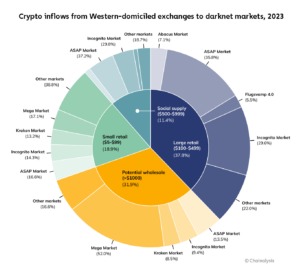
While bitcoins and darknet markets may entice users with promises of privacy and freedom, they come with inherent risks:
- Legal Consequences: Engaging in transactions on darknet markets can lead to severe legal repercussions, including arrest and prosecution.
- Scams: Many users fall victim to scams, where sellers may take bitcoins without delivering promised goods.
- Security Threats: Darknet activities often attract hackers looking to exploit vulnerabilities, potentially endangering users’ personal information.
FAQs About Bitcoins and Darknet Markets
Q: Are all darknet markets illegal?
A: While many darknet markets deal in illegal goods, some may offer legal products and services. However, the majority are associated with illicit activities.
Q: Can bitcoins be traced?
A: Yes, while bitcoins offer a level of anonymity, transactions are recorded on a public ledger known as the blockchain, which can potentially be traced back to users.
Q: How can I stay safe while using bitcoins?
A: It’s crucial to use wallets with strong security features, be cautious of scams, and ensure that any transactions are legal and ethical.
In conclusion, the relationship between bitcoins and darknet markets highlights significant trends in commerce and privacy. With both advantages and risks, it is essential for users to be well-informed to navigate these complex digital landscapes safely and responsibly.